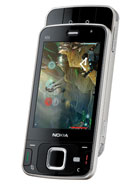
Nokia N96

2G Network GSM 850 / 900 / 1800 / 1900
3G Network HSDPA 900 / 2100

HSDPA 850 / 1900 - American version
Announced 2008, February
Status Available. Released 2008, September

Dimensions 103 x 55 x 18 mm, 92 cc
Weight 125 g

Type TFT, 16M colors
Size 240 x 320 pixels, 2.8 inches

Type Polyphonic (64 channels), Monophonic, True Tones, MP3
Customization Download
Vibration Yes

Phonebook Practically unlimited entries and fields, Photocall
Call records Detailed, max 30 days
Card slot microSD (TransFlash), up to 8GB, buy memory

- Accelerometer sensor for auto-rotate
- 16 GB internal memory
- 128MB RAM, 256MB storage memory
- Dual ARM 9 264 MHz CPU

GPRS Class 32, 107 / 64.2 kbps
HSCSD Yes
EDGE Class 32, 296 kbps; DTM Class 11, 177 kbps
3G HSDPA, 3.6 Mbps
WLAN Wi-Fi 802.11 b/g, UPnP technology
Bluetooth Yes, v2.0 with A2DP
Infrared port No
USB Yes, v2.0 microUSB

OS Symbian OS 9.3, S60 rel. 3.2
Messaging SMS, MMS, Email, Instant Messaging
Browser WAP 2.0/xHTML, HTML, RSS reader
Games Downloadable, order now
Colors Black
Camera 5 MP, 2592x1944 pixels, Carl Zeiss optics, autofocus, video(VGA 30fps), flash; secondary VGA videocall camera

- Built-in GPS receiver
- A-GPS function
- DVB-H TV broadcast receiver
- Dual slide design
- Java MIDP 2.1
- MP3/AAC/AAC+/eAAC+/WMA player
- 3.5 mm audio output jack
- TV out
- Stereo FM Radio with RDS
- Organizer
- Office document viewer
- T9
- Push to talk
- Voice dial/memo
- Built-in handsfree


Standard battery, Li-Ion 950 mAh (BL-5F)
Stand-by Up to 220 h
Talk time Up to 3 h 40 min


Refurbished Cell Phones Get a Little Smarter


Suzanne Choney, MSNBC

JANUARY 22, 2009


When AT&T recently offered refurbished 8-gigabyte iPhone 3Gs for $99, news of the deal eclipsed another major iPhone announcement, that Wal-Mart is now stocking the hottest smartphone in America.

If you can get a refurbished iPhone for $99, are good deals in the offing for other popular smartphones, like the BlackBerry Storm and the Google G1?

They may be if enough consumers decide to return their multi-functional gizmos within 30 days, making those phones eligible to be refurbished and re-sold by wireless carriers.

“As more and more phones become smartphones, more capable and more feature-rich, we’re likely to see the number of refurbished phones going up because of returns,” said Kevin Burden, ABI Research’s mobile devices research director. “Some phones may not meet the expectations of buyers, who see them as too complex.”

Smartphones, so-named because of their ability to handle e-mail, Web browsing and some computer-like functions, are one of the hottest segments in the cell phone market, propelled in part by devices such as the iPhone and Research In Motion’s line of BlackBerrys.

But the complicated bits of communications gadgetry are not for everyone, said Burden. “We’ve talked to plenty in the industry who say, ‘We sell (some) people a snappy smartphone, and they come back a couple weeks later and say they don’t get it, it’s too confusing. They want a phone where they can make a phone call, do text messaging and maybe have something to hold their calendars.’ ”

Touchscreen phones, in general, are still new to many users, who may think they want such phones, but find themselves longing for physical buttons to press, be it a phone keypad or QWERTY keyboard, once they get the phones home.

“What I have seen with touchscreens is that they tend to polarize people,” Burden said. “Some people absolutely love them; others absolutely hate them. But if a phone is returned, it doesn’t necessarily mean it’s not working right or working the way it’s supposed to; it’s just not meeting the expectations of those particular users.”

Appeal in a down economy

The $99 iPhone, available only online, was a “promotion” for the last two weeks of December, along with $199 pricing for the 16GB iPhone, according to AT&T spokesman Mark Siegel. Both phones were priced at $100 less than the retail cost with a two-year data and voice contract. As of Jan. 1, refurbished iPhone prices were back up, with 8GB iPhones shown on AT&T’s site for $149, and the 16GB model at $249.

Given the current economy, refurbished phones — especially high-demand models such as the iPhone — may have more appeal to cash-strapped buyers.

“I think what you sometimes see in tough times is a flight to quality,” said Siegel. “And the iPhone’s a great example of that. If we can put refurbished iPhones into the hands of folks for just $99 and they get the benefits of this great device, all the better.”

Siegel declined to say whether AT&T will offer another round of discounted refurbished iPhones, which come with a warranty of “90 days or more,” according to the company. New phones usually come with a one-year warranty.

AT&T, which sells other refurbished phones, including models of the BlackBerry Curve and Pearl, as well as Palm Centro, notes on its site that “refurbished phones are previously owned devices that have been unused or lightly used and returned during the 30-day trial period.”

Each phone, the company says, is “independently quality tested and loaded with the latest software to meet current factory standards.”

Part of the iPhone’s appeal is its sleek design, encased in black or white plastic, with a large 3.5-inch touchscreen. AT&T notes that “some refurbished iPhone 3G devices will have minor scratches,” which could be a deal-killer for those who want to start their relationship with the phone scratch-free.

Always check the warranty

Refurbished phones are also available via the Web through independent retailers. Carriers sometimes also sell them to customers who opt for pre-paid, or pay-as-you-go, phone services.

The major wireless carriers vary when it comes to selling refurbished phones to customers for contract plans. Sprint and Verizon Wireless do not, as of now. T-Mobile sells some refurbished phones (no G1s, or Android phones, yet), and AT&T has the broadest selection available.

The disincentive for carriers is the price; refurbished phones can sell for up to 60 percent less than retail price.

Checking what kind of warranty is offered on a refurbished phone is important. Ninety days is considered good and should be enough time for you to learn if there are any problems with the phone; anything less may not be so reassuring.

T-Mobile says its refurbished phones are under warranty “from either 90 days of receipt or the remainder of your 12-month service agreement, whichever is longer.”

'Double-edged sword'

“Buying a refurbished smartphone is a double-edged sword,” said Adam M. Fendelman, who reports on cell phones for About.com’s cell phones guide.

“On one hand, they tend to be more expensive than cell phones and the definition of refurbished is that you're buying for less. On the other, you get what you pay for and you're opening a can of worms for potentially more problems than buying new.”

Fendelman recommends buyers compare the cost savings they might get by going with a refurbished smartphone to the cost of a new one “to gauge whether that's worth potential hassles down the road. If your refurbished price is 10 percent off, that may not be worth it for you. If you're being offered 30 percent off, though, that may be the golden number.”

He also advises buyers to ask wireless carriers and vendors if they will guarantee that the refurbished smartphone they’re buying “isn’t dead on arrival.” Buyers should also ask why the phone was returned in the first place and if it was restored to factory specifications.

Still a small percentage of market

New phones that are returned to wireless carriers and wind up being sold as refurbished are supposed to be “reflashed,” meaning all the data previously on the device is wiped clean, and the phone’s software is restored to factory settings.

For now, refurbished phones remain a relatively small percentage of the worldwide cell phone market, said Burden of ABI Research.

In 2008, with about 1.2 billion handsets shipped worldwide, 40.7 million of those were refurbished phones. It’s a number he expects will increase this year to perhaps 46 million.

ReCellular Inc., which sells both refurbished and recycled phones to businesses worldwide, says that the “average American replaces their cell phone every 18 months.”

Three years ago, ultra-compact phones, like Motorola’s early generation of RAZRs, and “entry-level” camera phones were among the popular consumer choices. “Today, those phones are being retired in large quantities as consumers are moving toward newer technologies, especially smartphones and multimedia-enabled handsets,” said Chuck Newman, company CEO, in a statement.

Based on that trend, the company said it “expects the best-selling models of today — such as the Apple iPhone and BlackBerry Curve — to appear on the list of top recycled models in 2009 or 2010.”

Source: www.happynews.com


Cellphone-Mate CM2000-WL 40dB


Product summary

The goodThe good: The Cellphone-Mate CW2000-WL delivers a stronger signal to your cell phone.

The badThe bad: The cell phone-Mate CW2000-WL comes with a load of restrictions regarding placement of its various parts. It won't support Nextel's iDEN network and voice quality improved only marginally.

The bottom lineThe bottom line: Provided you can afford it and you can get through the set-up process, the Cellphone-Mate CW2000-WL should makes a positive difference in your overall call quality.


CNET editors' review

* Reviewed by: Kent German
* Reviewed on: 01/22/2009

Quality cell phone signal amplifiers tend to be more expensive than most phones, but the cost might just be worth it really need the enhanced coverage. If you live in a city, you probably don't need one, but if you reside in a rural area then you should at least consider the option. Wilson Electronics offers some of the best options that we've reviewed, but the CW2000-WL from Cellphone-Mate is a solid choice as well.

The CW2000-WL's design is similar to the Amplifier Cradle Kit from Wilson Electronics. It consists of four main parts: the main amplifier, a power cable, an external antenna for catching the cell phone signal, and an internal antenna for transferring the signal to your phone. It supports CDMA, TDMA, GSM, and AMPS networks, but it will not support Nextel's iDEN.

The amplifier measures 4.3 inches by 4.5 inches by 1 inch and weighs 9.4 ounces. Its silver metal casing gives it a solid feel in the hand and an industrial look. Like with the Wilson product, the CW2000-WL is easy to set up, but the finished arrangement can be bit clunky. First, you must find a place for the amplifier box. If you're in a car, we recommend stashing it under one of the front seats. Otherwise, if you're at home you can put it almost anywhere.

The CW2000-WL's outside antenna measures six inches and is composed of a sturdy but flexible metal. It has a strong magnetic base so it should stay it place on your car's roof even at high speeds. You'll need to run the connecting cable through the car door or window and attach it to the amplifier box. The wire stretches an ample 10 feet, but keep in mind that it can be a tricky process to thread the wire into your car or home while keeping it out of the away.

We also found it rather difficult to place the outside antenna in just the right spot. According to the CW2000-WL's user manual, it is only for outside use and it must be at least one foot clear of other antennas. What's more, a rather ominous "Warning" clause in the manual advises that the antenna should be placed at least three feet from any vehicle occupants. Depending on the size of your car, it may be difficult to follow all of the advisories to the letter.

The internal antenna also comes with its own set of rules. It should be placed at least five feet from the external antenna, at least four inches from any metal surface, and at least 10 inches from any person. Here again, just the right spot may not exist if you have a small car. The internal antenna is plastic and measures 4.5 inches. You can secure its adhesive back to a variety of surfaces, but we wouldn't recommend attaching it to glass. The cord connecting it to the amplifier box also measures 10 feet.

The final step in the CW2000-WL's set-up process is to plug in the amplifier using the included cigarette light or AC adapter. Both come with relatively long cables. Once you're ready to go, just flip the amplifier's power switch on the left side. An indicator light will tell you when it's ready to go.

We tested the CW2000-WL with a Nokia 5300 Xpress Music, an Apple iPhone 3G, and a Samsung Instinct. With each model we saw an improvement in signal strength, particularly when in an area of San Francisco that has poor reception for all carriers. We did see a reduction in dropped calls, less static, and smoother connection. The improvement to each phone was about the same, though the Instinct had an extra bar at times.

Keep in mind, however, that a stronger signal and better voice quality are two different things. Though the CW2000-WL promises to improve both, voice quality continues to be variable. True, we never lost a connection when using the amplifier, but voices on all phones still sounded a bit distorted and the volume was rather soft. Even so, the CW2000-WL makes a change for the better.

source: reviews.cnet.com


Twitter Delicious Facebook Digg Stumbleupon Favorites More